Does cold calling still work in B2B sales?
By Derek Shebby — 13-time Xerox President’s Club Award winner · Founder, Modern Sales Training
I want to settle this once and for all, because I’ve been hearing the same argument for years — and it’s costing salespeople real money.
Yes. Cold calling still works.
For the territory reps I teach, cold calling includes walking into businesses and following up by phone. These are connected parts of prospecting. The visit can create an appointment or give the later call more context.
Not because I said so. Because I watched it work for 17 years at one of California’s largest Xerox dealers, where I won the President’s Club 13 times. And because I watch it work today, every week, with the 150+ reps I coach across office technology, managed IT, irrigation, mailing equipment, and a dozen other B2B industries.
The reps who tell me cold calling doesn’t work fall into two categories. The first group tried it without any real training, got rejected a few times, and decided the whole activity was pointless. The second group reads LinkedIn posts from SaaS marketing executives who have a financial interest in selling them email automation tools — and accepted that narrative without ever testing it against their own reality.
Neither group is making as much money as they could be.
Don’t take my word for it. Here’s what my reps are texting me from the field:
Real reps. Real results. In the field.
These are not special people with some natural gift for sales. They are regular B2B reps who learned a process and went to work. Names are blacked out to protect confidentiality. The results are real.
These individual student messages include both in-person field activity and phone prospecting. Read each example in the context of the activity the student reported.
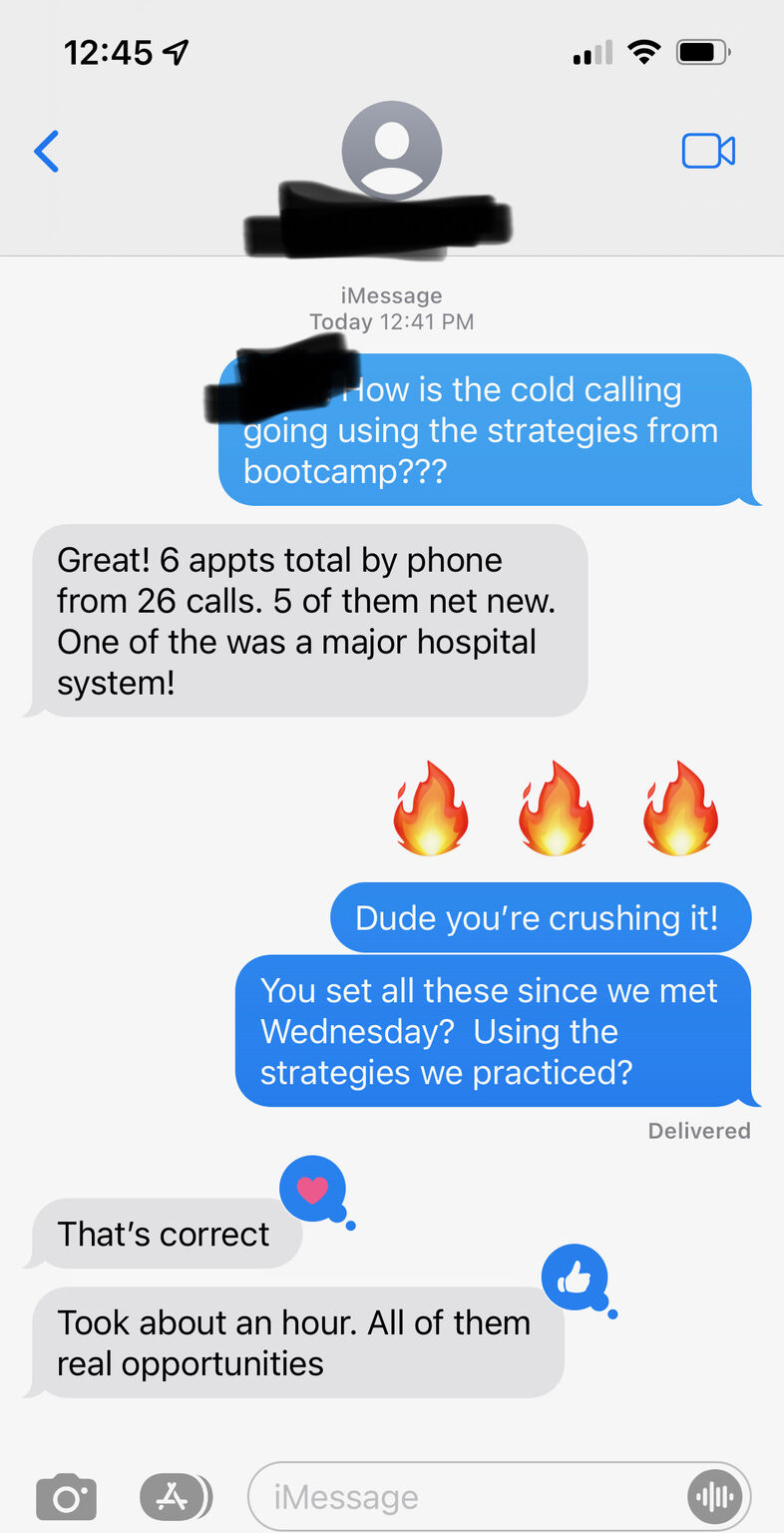
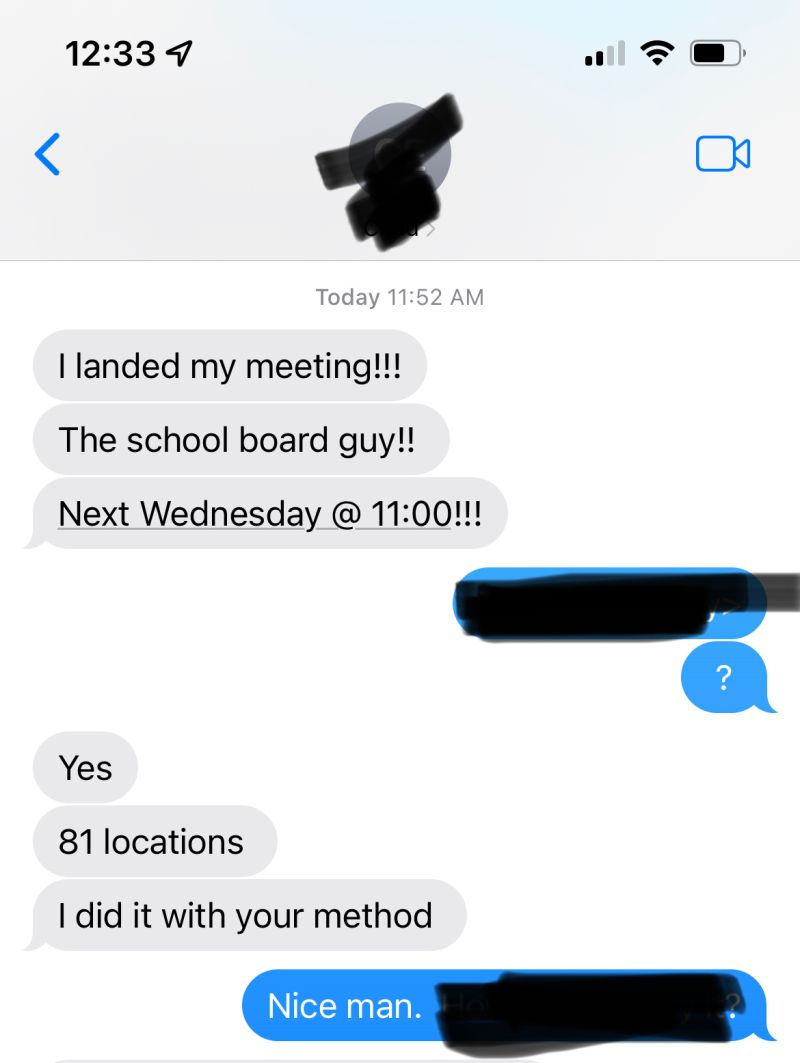
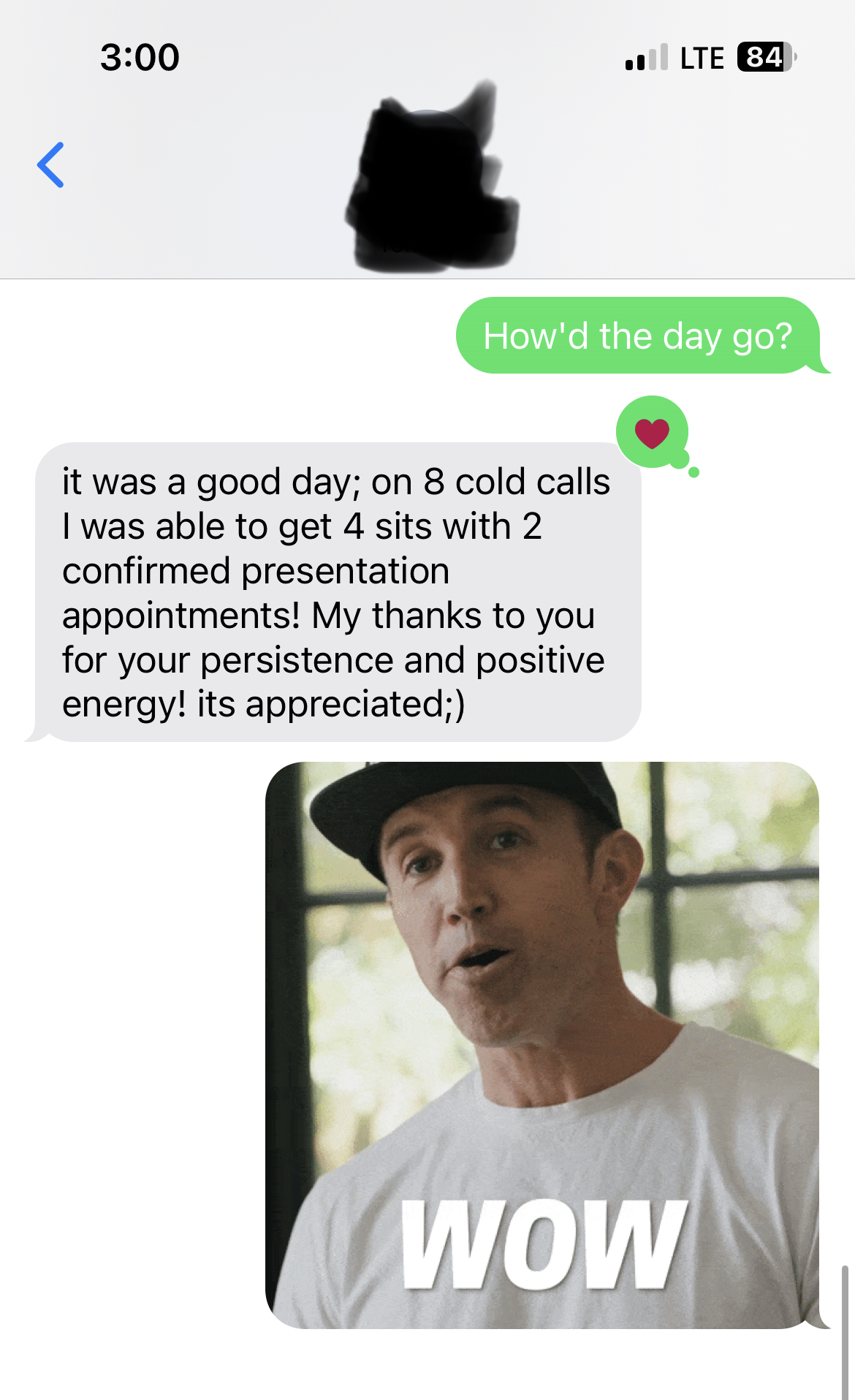
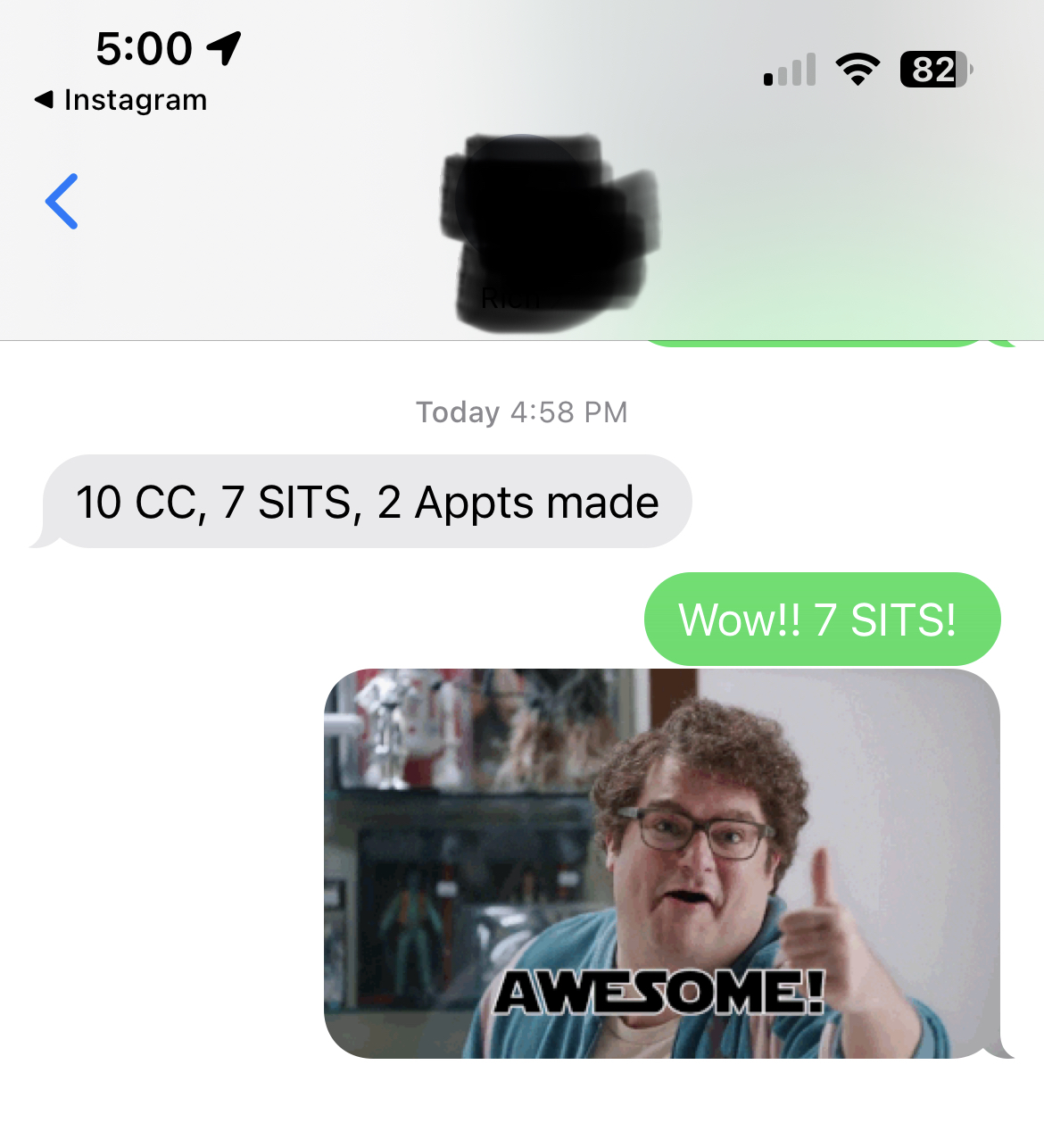
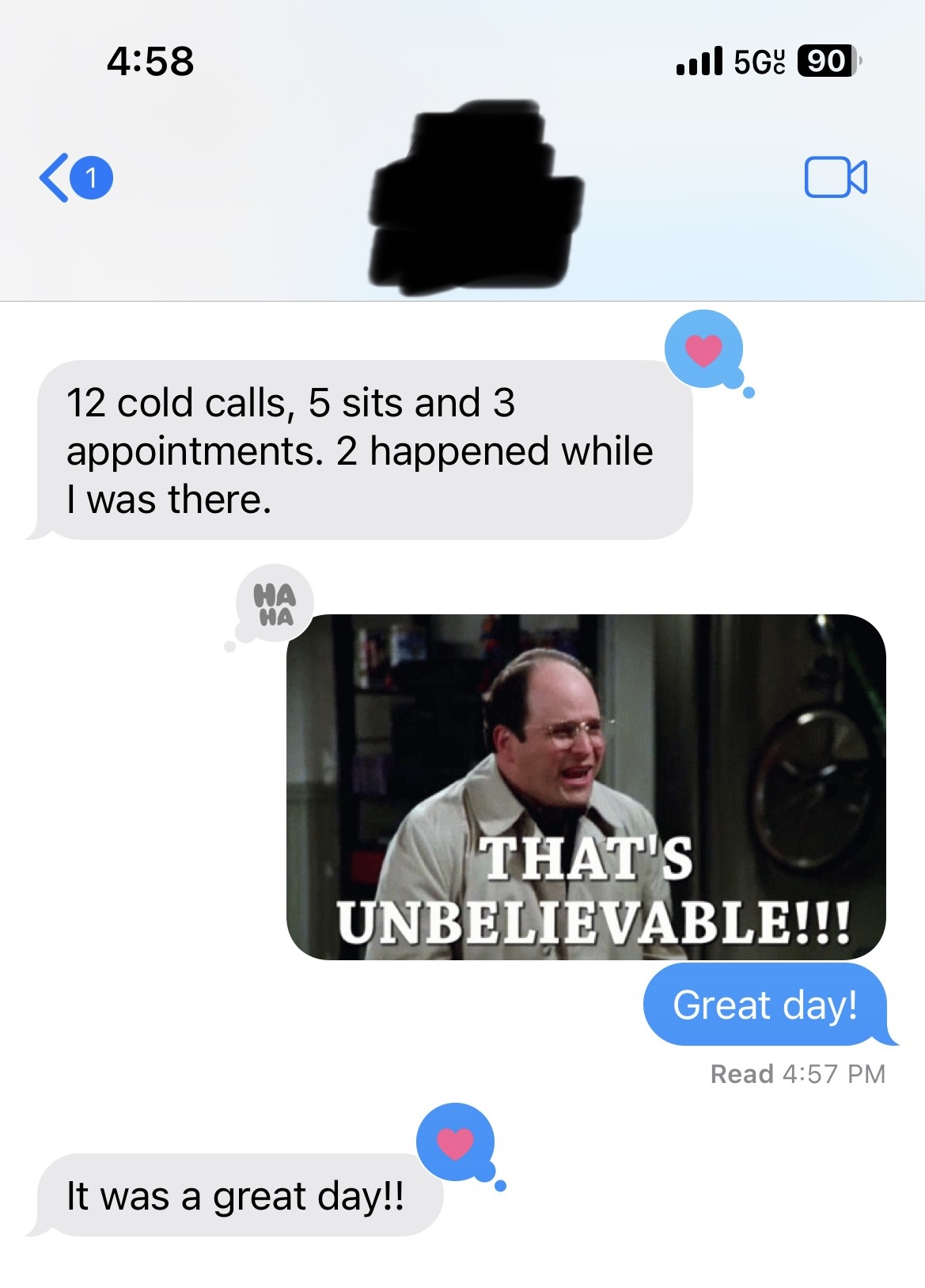
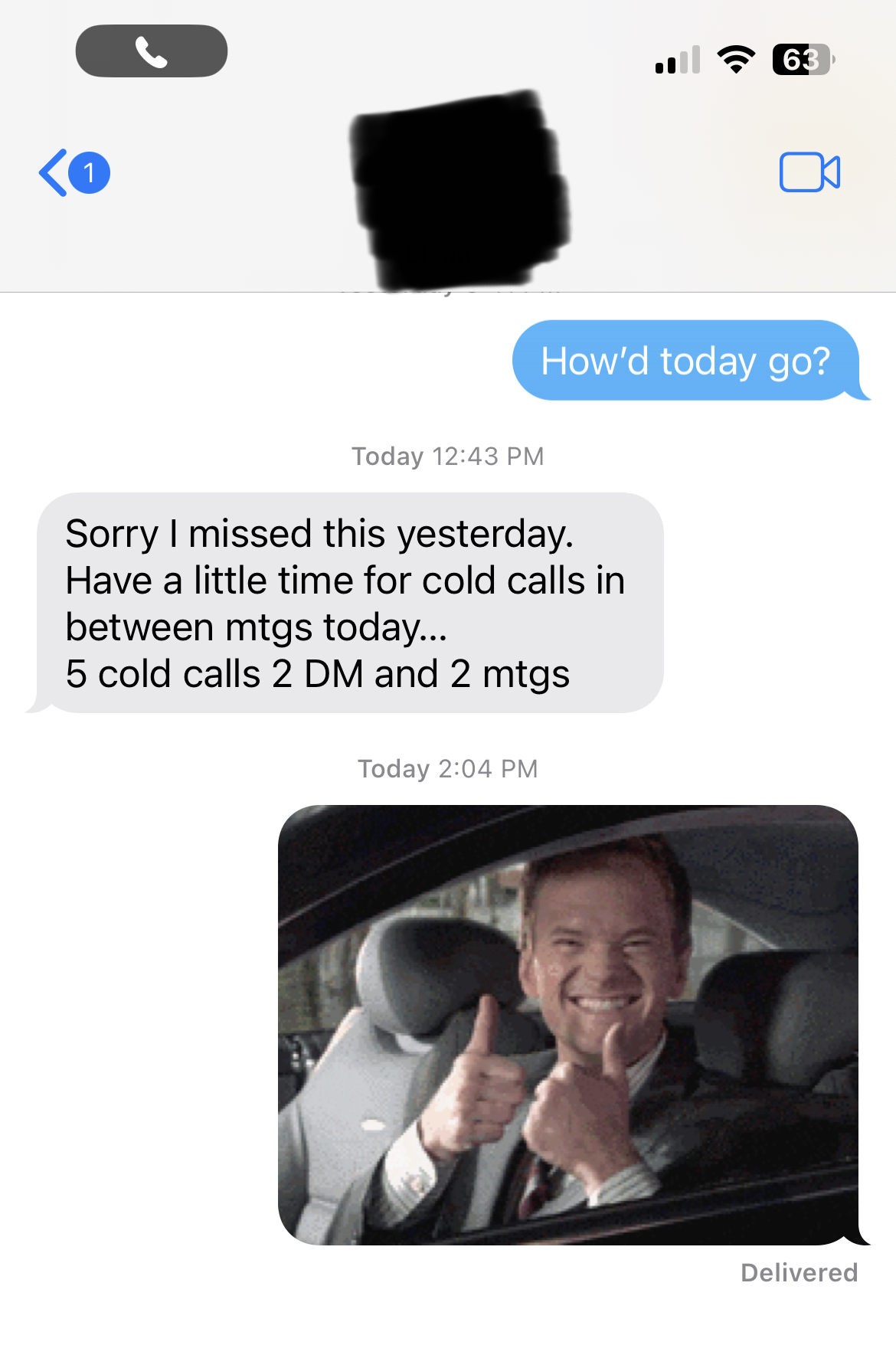
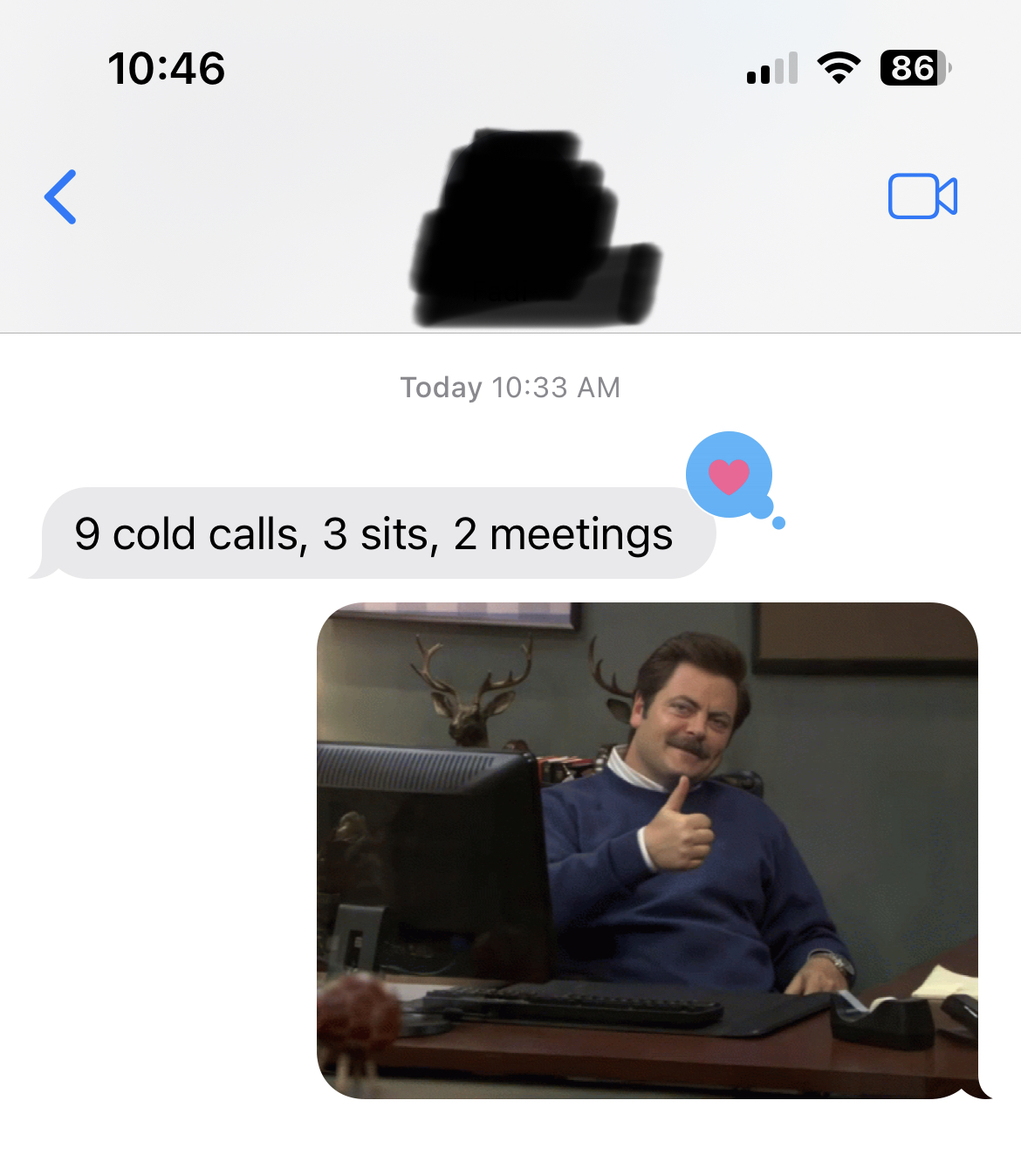
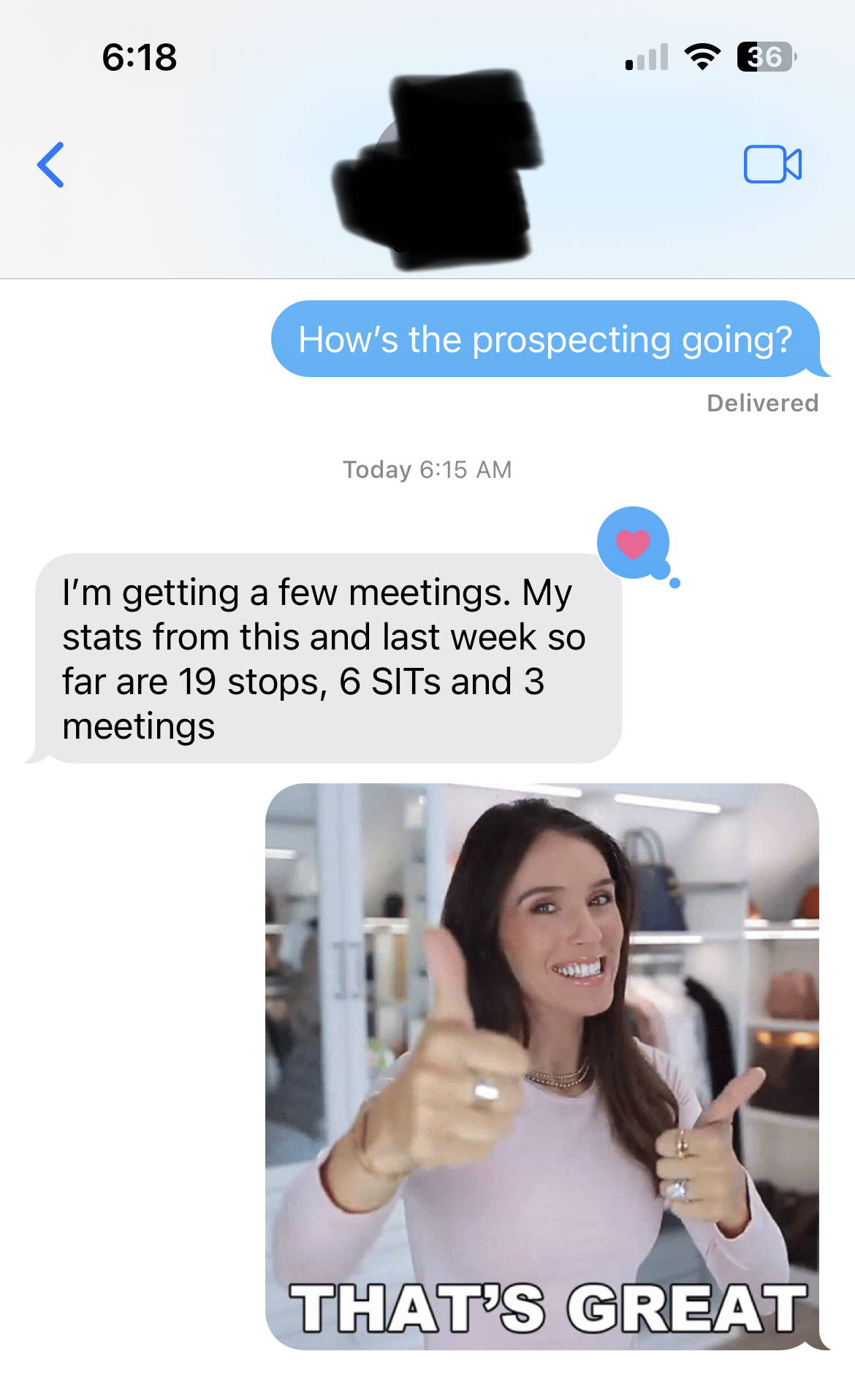
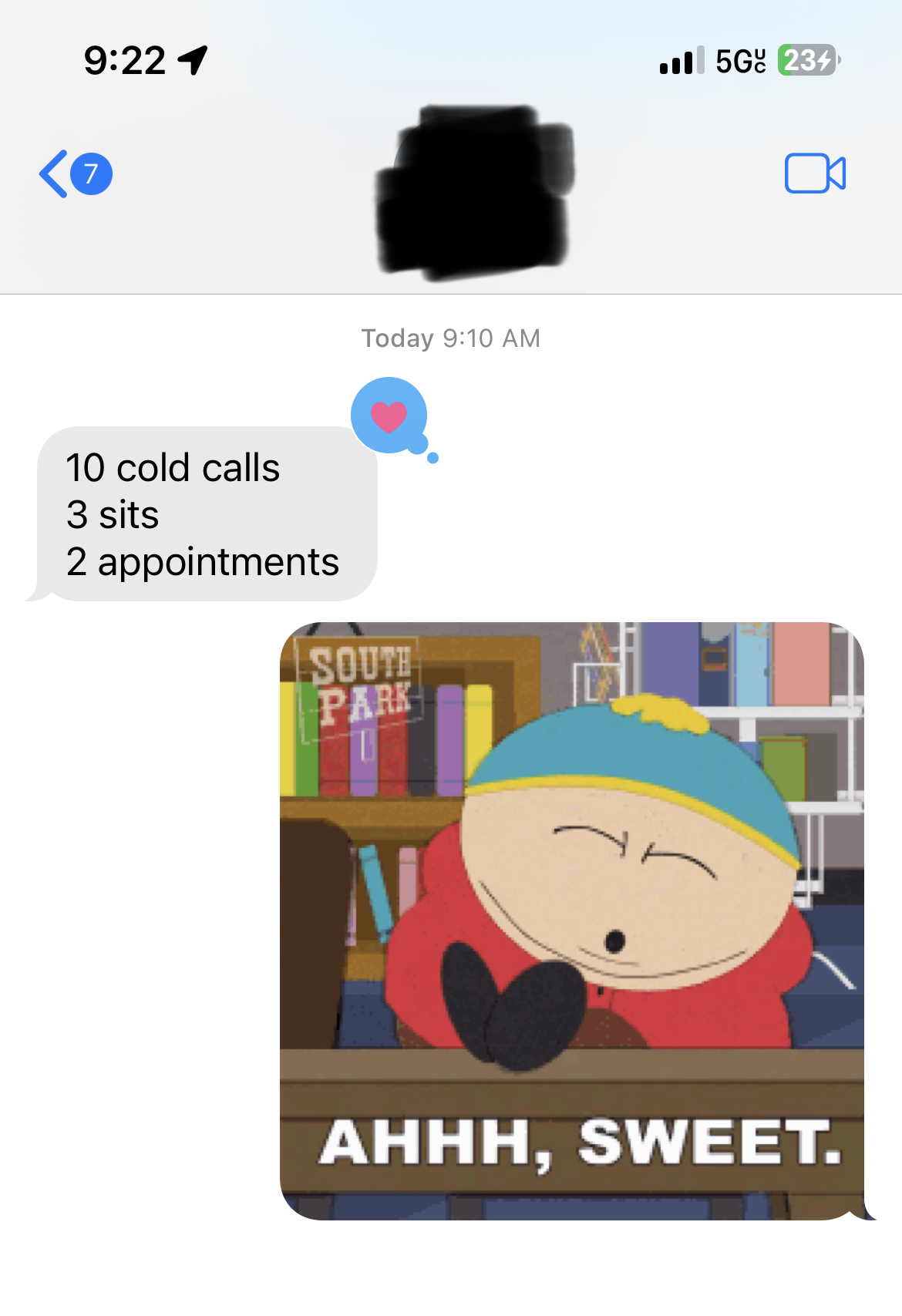
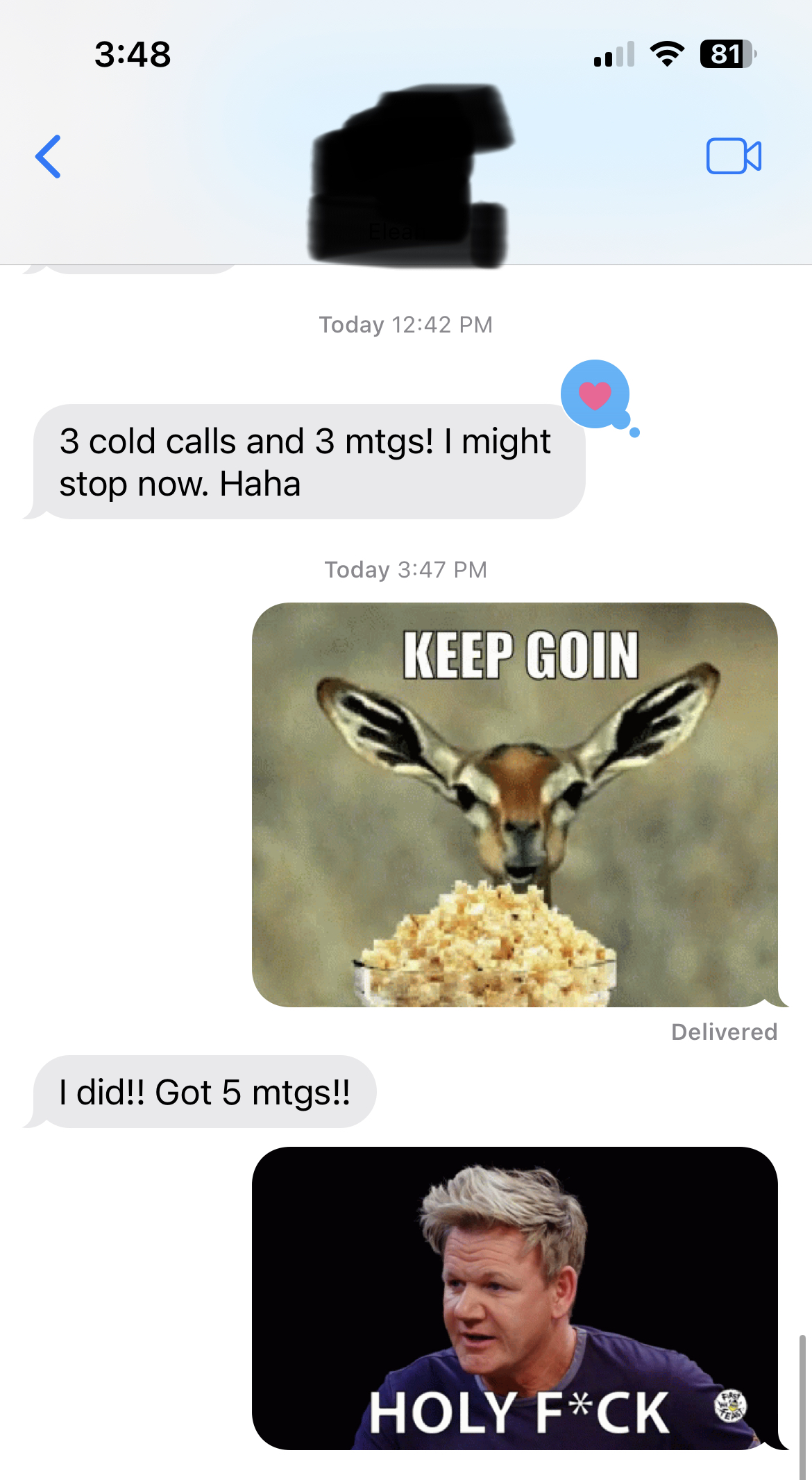
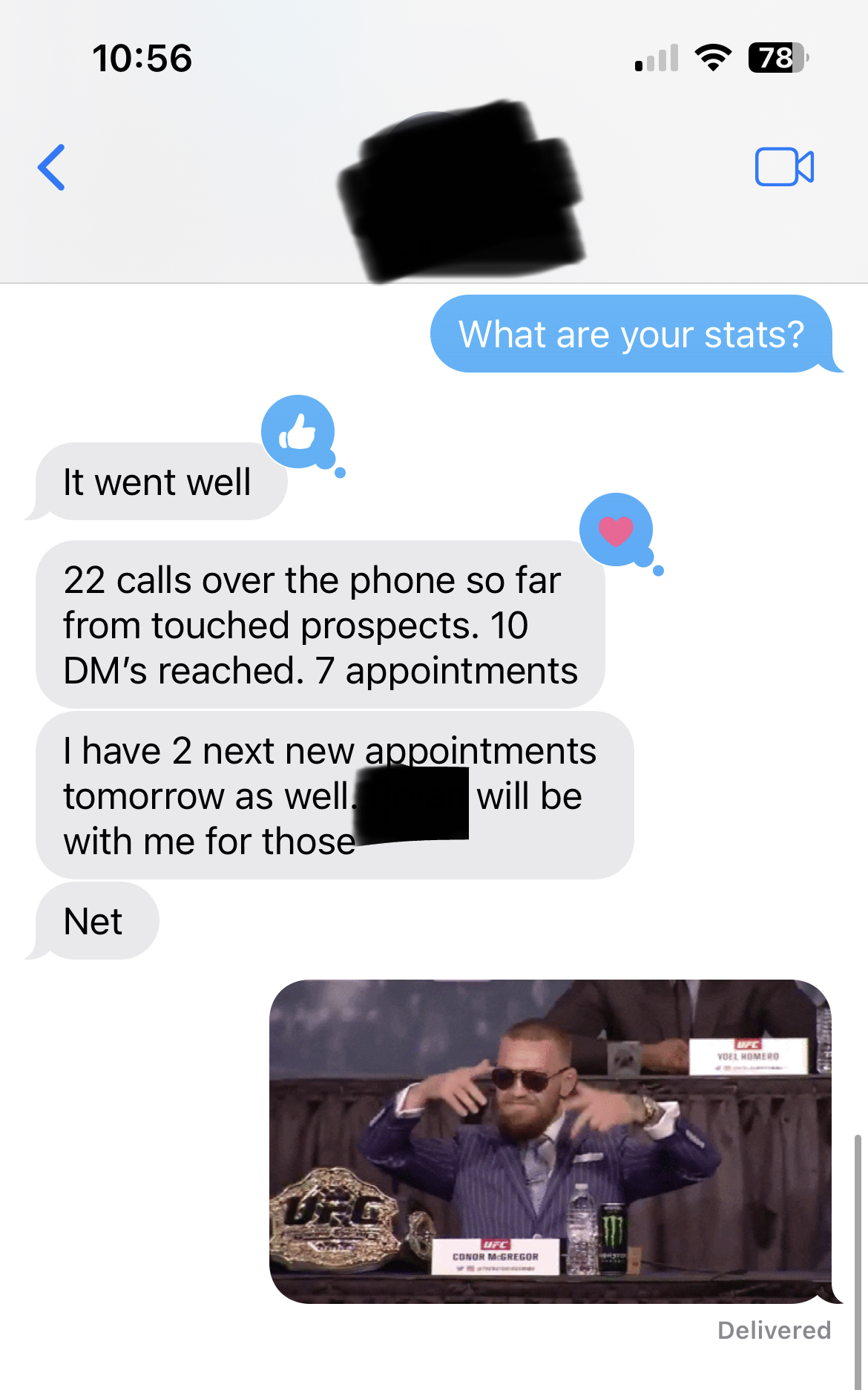
These are the texts I get on a regular basis. Not curated success stories — real reps, real days, real results from people who went through Bootcamp and applied what they learned.
Explore more cold-calling results from Derek’s broader training, including phone appointments, team field prospecting and signed net-new deals. Each example includes its original message and context.
Where the “cold calling is dead” myth comes from
The people saying cold calling is dead are almost always selling you something that replaces it — email sequences, LinkedIn automation, inbound content marketing, paid ads. None of those things are bad. Some of them work great. But they are not the same as picking up the phone or walking into a building.
Here’s the reality: the “cold calling is dead” narrative was built around high-velocity inside sales in the tech industry, where reps are dialing hundreds of small-to-mid-size software buyers who are already digitally literate and research every vendor online before talking to anyone. In that world, the buyer journey changed significantly. Inbound and social selling started producing better results than mass cold dialing.
That is not your world.
If you are a territorial B2B rep selling to a geographic market — office technology, managed print, managed IT, manufacturing, distribution, irrigation, furniture, mailing equipment — your buyers are not doing deep vendor research before you walk in the door. They are running their businesses. They are not on LinkedIn waiting for your InMail. They are in their offices, their warehouses, their shops.
Walk in. Call them. That’s still how you get in front of them.
What the data actually says
The research on cold calling is more nuanced than the headlines suggest. What’s consistently true across studies:
- It takes 8 to 12 touches before a prospect agrees to a meeting. Most reps give up after two or three. That is not cold calling failing — that is reps failing to work the process.
- Decision-makers at mid-market B2B companies are still reachable by phone. CEOs and department heads at $5M–$100M companies are not protected by the same firewall of gatekeepers and vendor management systems you find at enterprise accounts.
- In-person cold calling outperforms phone cold calling for getting past gatekeepers in most territorial B2B industries. Walking in costs you 10 minutes. It produces face time, a business card, a name, and a reason to follow up by phone.
- Multi-channel outreach dramatically outperforms single-channel. In-person visit + phone follow-up + email + LinkedIn = significantly better results than any single channel alone. Cold calling is one channel in a sequence, not the only move.
What separates reps who get results from the ones who give up
I trained over 30,000 salespeople. I’ve seen every version of cold calling — the reps who crush it and the ones who hate it. Here is what I know for certain: the difference is almost never the activity. It’s the preparation and the process.
1. They have a real value proposition
Most reps walk up to a prospect and lead with their company name and product. That is not a value proposition. A value proposition is a one or two sentence explanation of a specific problem you solve for a specific type of business — stated in the language of the customer, not your sales deck. Reps who have this get appointments. Reps who don’t get the door.
The appointment is where the next challenge begins: helping the buyer see enough value to consider a change. If interest in a meeting keeps turning into a price objection later, Building Value is a deeper resource on differentiation and competitive B2B selling.
2. They have a prepared talk track
Cold calling without preparation is improvising in front of a stranger who didn’t ask to talk to you. You will stumble. You will say the wrong thing. You will get flustered when they push back. Reps who win at cold calling have practiced their opener, their value proposition, their response to “we’re happy with our current vendor,” and their ask for an appointment. They’ve said it out loud in practice before they say it in front of a prospect.
3. They know their numbers
Top cold callers are not afraid of rejection because they have internalized their ratios. They know that if they contact 20 prospects, roughly a third of those — six or seven — will turn into real conversations with a decision-maker. And half of those conversations will turn into appointments. That’s three to four new meetings from 20 contacts. They are not hoping every call goes well. They are executing a numbers game with a process, and they know what the output will be if they put in the input.
I have personally watched reps make 13 in-person cold calls in a single day and walk away with 5 net new appointments. How can you argue that cold calling is dead with that kind of ratio?
4. They follow up
This is where most reps leave the most money on the table. One call, no response, move on. That is not prospecting. That is sampling. Reps who get consistent results from cold calling treat every prospect as part of a sequence — in person, phone, email, LinkedIn, back in person — until they get a meeting or a clear “not now.”
5. They have a mental framework for handling rejection
Rejection is not personal in cold calling. The prospect is not rejecting you — they are rejecting the interruption, or the timing, or the product category, or any of a dozen things that have nothing to do with you. Reps who understand this emotionally, not just intellectually, are the ones who can make 20 contacts in a day and not carry the weight of the 19 who said no into the one conversation that matters.
The cold calling I teach — and what it produces
When I built Modern Sales Training six years ago, cold calling was the first pillar I built the curriculum around. Not because it’s the only way to prospect. But because in the B2B industries I serve — territorial reps calling on businesses in a geographic market — it is still the most direct, most cost-effective, and highest-conversion prospecting activity available.
I teach reps to do two things well: cold call and run effective meetings. That’s it. Those are the two skills that separate Outliers — the top producers in any market — from the reps who wonder why their pipeline is always thin.
One of my Bootcamp graduates told me her cold calling appointments improved 300% after going through the program. Not because she started doing something magical. Because she learned a process, practiced it, and executed it consistently.
That is what cold calling produces when it’s done right.
The question you should actually be asking
Stop asking whether cold calling works. Start asking whether you are doing it correctly.
Do you have a value proposition that means something to the prospect? Do you have a talk track you’ve practiced? Do you know your ratios? Do you follow up consistently across multiple channels? Do you have the mindset tools to handle rejection without it derailing your day?
If the answer to any of those is no, the problem is not cold calling. The problem is the training you haven’t done yet.
Cold calling will still be working 10 years from now for the reps who learn how to do it. And it will still be “dead” for the ones who never did.
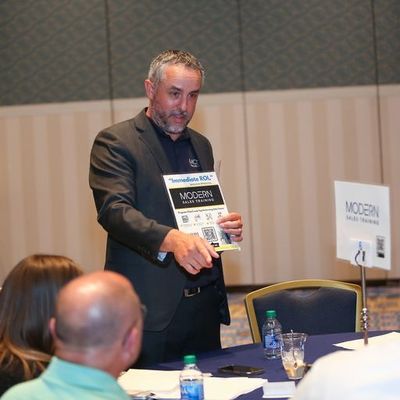
Derek Shebby
Founder, Modern Sales Training — 13× Xerox President’s Club Award Winner
Derek spent 17 years as a top sales executive at one of California’s largest Xerox dealers, winning the President’s Club 13 times and growing his division from $40M to $100M+. He founded Modern Sales Training to teach the same process to B2B sales teams everywhere. 30,000+ salespeople trained. 150+ reps coached live every week. About Derek →
Train your team to cold call consistently
Sales Bootcamp covers cold calling, follow-up, and running effective meetings — live, 12 weeks, capped at 10 reps.
Request a ConversationRelated Posts
Self-paced courses vs live programs
The self-paced Modern Sales Training courses, including Modern Sales Performer, The Fearless Prospector, and Virtual Selling Machine, are built around timeless sales fundamentals. They give reps the core frameworks, language, and habits they can keep using for years. For the most current strategies, live coaching, market updates, and the newest AI-focused prospecting and selling ideas, reps and managers should look at the live Tier 1, Tier 2, and Tier 3 programs: Sales Bootcamp, Sales Spartan, and Sales Leaders Bootcamp.