
Sales Prospecting Plan: A Weekly Template for B2B Reps
By Derek Shebby · Founder, Modern Sales Training · 13-time Xerox President's Club Award winner
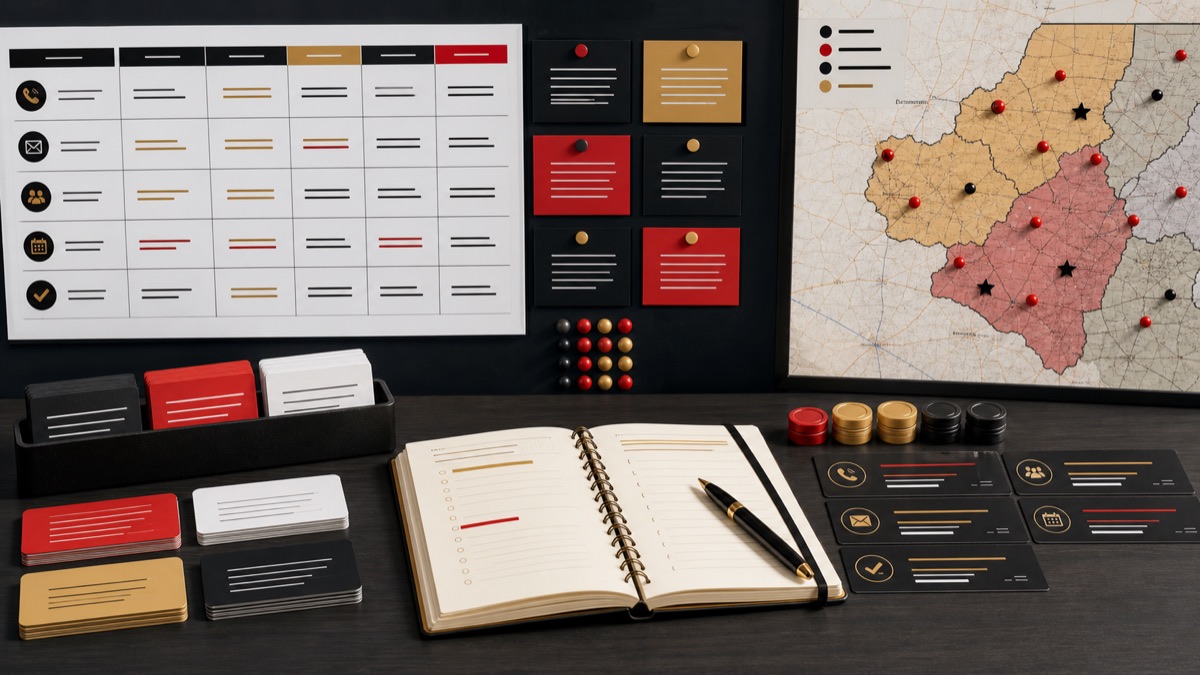
Quick answer: A weekly sales prospecting plan starts with three lists: the active pipeline list, the current account list, and the net-new prospecting list. Every week, the rep should know which accounts need to move forward, which current customers have expansion potential, and which new accounts deserve focused prospecting activity.
Everything starts with a list

Every efficient sales week starts with a list. Without a list, the rep reacts to whatever is loudest: email, admin, service issues, easy accounts, or random follow-up. With a list, the rep can decide where time should go before the week gets busy.
This is the same logic behind the Fearless Prospector framework: List, Field, Phones. Start with the list. Get into the field where it makes sense. Use the phone to follow up and move conversations forward. If the rep skips the list, the rest of the process gets messy.
The three lists every rep should manage

A weekly prospecting plan should not be one vague list called "prospects." Most B2B reps need to manage three different lists at the same time: the active pipeline list, the current account list, and the net-new prospecting list. Each list has a different purpose, but all three feed the funnel.
List 1: Active pipeline and funnel opportunities

The first list is the rep's active pipeline list: the opportunities already in motion. This includes accounts at the top of the funnel, accounts with early conversations, accounts with appointments scheduled, accounts in proposal, and deals the rep expects to close this month.
This list should be front and center every day. The question is simple: what needs to happen next to move each account forward? Some accounts need a follow-up call. Some need a decision maker added. Some need a proposal clarified. Some need urgency rebuilt. Some need a manager involved. A strong rep does not let active opportunities sit untouched because they are busy chasing something easier.
A busy pipeline can still contain deals the buyer sees as a price comparison. Building Value explores how differentiation and buyer value shape those competitive opportunities. It is a useful next read for reps who want stronger conversations after the appointment.
List 2: Current accounts with growth potential
The second list is the current account list. Many reps already have customers who trust the company, but those customers may only be using one solution out of five or ten solutions the company offers. That creates a major opportunity if the rep manages the list intentionally.
Every week, the rep should identify which current customers are the best fit for an additional solution, an upgrade, a replacement, a review, or a deeper business conversation. Some accounts may have a clear need because of growth, equipment age, contract timing, service issues, workflow changes, staffing changes, compliance pressure, or another trigger. Those accounts should not be left to chance. They deserve a specific plan for when the rep will see them, call them, or ask for the next conversation.
List 3: Net-new prospecting accounts
The third list is the net-new prospecting list. This is the new business list: accounts the rep does not currently have, but wants to break into. This list should be segmented so the rep knows which accounts matter most right now.
Useful segments might include top target accounts, highest-potential opportunities, vertical markets, low-hanging fruit, accounts showing a trigger event, accounts by geography, accounts by size, or accounts likely to have a specific need the rep can solve. A rep should not treat a small low-fit account the same way they treat a top target that could change the year. The list should help the rep prioritize.
Build the week from the three lists
Once the three lists are clear, the weekly plan becomes more practical. The rep should schedule time to move active pipeline forward, time to work current account growth opportunities, and time to create new opportunities from the net-new list. That balance matters because a rep can have a busy week and still starve the future funnel.
The plan should answer: which pipeline accounts need a next step, which current accounts should be visited or called, which new accounts should be prospected, which field routes make sense, which phone blocks are protected, and which follow-up commitments cannot slip.
For reps who own a territory, field prospecting and phone follow-up should both have a place in the week. Planning one without the other can leave the account effort incomplete. Keep the prospecting work connected to the meetings and active deals it is meant to create.
Use a scorecard that shows movement

Track movement inside each list. For active pipeline, track next steps completed, stakeholders added, proposals advanced, and deals moved forward. For current accounts, track reviews scheduled, cross-sell conversations, upgrades discussed, and new needs uncovered. For net-new accounts, track field stops, names collected, calls made, conversations, appointments set, and qualified opportunities created.
Appointments matter, but movement matters too. A good weekly plan should show whether the rep is pushing the right accounts forward, expanding the right customers, and creating enough future opportunity.
Respect the 90-day effect
Prospecting work done now usually shows up later. If a rep stops prospecting because today feels busy, the damage often appears one quarter from now. The three-list plan protects the future funnel by making sure active deals, current account growth, and net-new business all get attention.
How managers should coach this skill
Review the plan before the week starts, not after it fails. Ask to see the active pipeline list, the current account growth list, and the net-new prospecting list. For each list, ask what the rep is trying to move forward this week and what activity is already scheduled. During the week, inspect whether the plan is happening while it can still be corrected. Managers can pair this coaching with How to Create a Sales Target List, Winning the Numbers Game, and The Fearless Prospector. Managers who want a stronger coaching system can also look at the Sales Leaders Bootcamp.
A simple weekly structure
A practical week can include one planning block, daily pipeline follow-up, current account review blocks, two or three protected net-new prospecting blocks, one or more field routes, and a Friday review. The exact schedule depends on the role, but the important part is that each list has a reserved place before the week becomes crowded.
How to keep the list alive
A list should not sit untouched. Active pipeline accounts need next steps updated. Current accounts need new solution opportunities identified. Net-new accounts need contacts, timing, fit, and follow-up reasons added as the rep learns more. Over time, the lists become a source of confidence because the rep knows where to go next.
What managers should inspect weekly
Inspect the lists, not just the dashboard. Look at which pipeline accounts moved, which current accounts were touched, which new accounts were added, why they fit, what the rep learned, which follow-ups are owed, and what appointments were created. This type of inspection helps reps build a prospecting system instead of chasing random activity.
Want the full training system?
This article gives reps the first layer. The Fearless Prospector, Create a Target List, Winning the Numbers Game, and Modern Sales Performer go deeper into building a repeatable prospecting system.
Try Fearless Prospector freeFAQ
What should be in a sales prospecting plan?
A weekly plan should include three lists: active pipeline opportunities, current account growth opportunities, and net-new prospecting accounts. Each list should have clear next steps, scheduled activity, field or phone follow-up, and a simple scorecard.
How often should reps prospect?
For territory reps building pipeline, prospecting should happen every week and often every day unless the pipeline is already full.
What is the most important prospecting metric?
Appointments set matters most, but managers should also inspect the leading activities that create appointments.

About the Author
Derek Shebby
Derek Shebby is the founder of Modern Sales Training and a 13-time Xerox Sales President's Club award winner. He has trained thousands of B2B sales reps and managers, with a focus on territorial prospecting, first appointments, value building, objection handling, and sales leadership.
Self-paced courses vs live programs
The self-paced Modern Sales Training courses, including Modern Sales Performer, The Fearless Prospector, and Virtual Selling Machine, are built around timeless sales fundamentals. They give reps the core frameworks, language, and habits they can keep using for years. For the most current strategies, live coaching, market updates, and the newest AI-focused prospecting and selling ideas, reps and managers should look at the live Tier 1, Tier 2, and Tier 3 programs: Sales Bootcamp, Sales Spartan, and Sales Leaders Bootcamp.
Related Modern Sales Training resources
- How I Prepare for a Great Sales Week
- How to Prepare for a Great Prospecting Day in the Field
- Sales Bootcamp
- How to Create a Sales Target List
- Winning the Numbers Game
- The Fearless Prospector
- Modern Sales Performer
- B2B Cold Calling Scripts
- How to Get Past Gatekeepers
- How to Prospect on Foot
- First Appointment Sales Questions
- How to Handle Price Objections
- How to Create Urgency in Sales
- Copier Sales Training