
10 ways to break into major accounts

Breaking into major accounts is one of the most valuable skills a B2B sales rep can develop — and one of the least taught. Most training programs focus on working the accounts you already have. But the reps who become Outliers, the ones making more money than anyone else in their industry, are the ones who know how to get in front of accounts no one else has cracked.
I spent 17 years at Xerox Corporation in California helping build one of the largest Xerox mega-dealer operations in the country. We grew from 0 million to over 00 million in revenue. The reps who drove that growth weren’t waiting for inbound leads. They were building sequences, showing up in person, working their networks, and using every creative tool available to get in front of the right people.
These 10 strategies are what I teach in Sales Bootcamp and what I’ve seen work across office technology, irrigation, managed IT, mailing equipment, and every other B2B industry with reps in the field. They’re not theory. They’re tactics that produce results when you execute them consistently.
1. Look at current accounts with fresh eyes

Your best major account opportunity might already be in your portfolio — you just haven’t seen it that way yet.
Before you go hunting for brand new logos, go back through every account you own and look at them differently. Your small accounts may be one location of a massive national footprint. One device placed today at a regional office could be the entry point to a 00,000+ fleet deal if you take the time to research the parent company.
Don’t overlook time-and-materials accounts either. They often have old equipment that’s overdue for replacement — and no one has asked them about it recently. Accounts seeded by previous reps in your territory can be untapped goldmines sitting right there in your CRM, waiting for a rep who’s willing to go back and do the work.
The question to ask about every account in your book: Is this the whole picture, or just one piece of something much larger?
2. Connect with all decision makers on LinkedIn

LinkedIn is the most underutilized tool in B2B prospecting, and most reps use it exactly backwards.
Go through every target account and connect with the people who actually run those companies — not just the contact you already have. Then do something most reps would never think to do: give them a LinkedIn recommendation. Unsolicited. Thoughtful. Specific to their role and what you genuinely know or observe about their work.
Always give a recommendation before you ask for one. That’s the rule.
Here’s the long game on this one: executives move around. The VP who didn’t have budget at Company A becomes the decision maker at Company B eighteen months later — and if you’ve stayed connected and invested in that relationship on LinkedIn, they bring you with them into the new account. A LinkedIn connection maintained over years is worth far more than a cold call to someone who’s never heard of you.
3. Build and own your 10-part prospecting sequence

If it’s not written down, it won’t get done consistently. That’s not a theory — that’s what I’ve watched happen with thousands of reps over the years.
You need at least 10 creative, multi-channel touches to break into a target account. Not five. Not seven. Ten. And the word “creative” is doing real work in that sentence. Your sequence needs to mix email, voicemail, LinkedIn, in-person drop-offs, and thoughtful gifts. It needs to feel like it came from a real person who actually thought about this specific prospect — because it should.
Respectfully persistent is the standard. Not just persistent.
What goes in the sequence is up to you, and that’s the point — make it yours. Thank you cards. Handwritten letters. A steakhouse invite. Something that shows up in their world and doesn’t feel like it came from a sales automation platform.
The reps who build a sequence like this and run it consistently are the ones who get the meetings other reps say are impossible to get.
For territory reps, major-account prospecting still connects in-person business calls and phone follow-up. Larger opportunities may justify the additional relationship-building and account work described here. The goal is to earn the chance to have a meaningful business conversation.
4. Commit to real networking groups
There’s a difference between casual mixers and structured networking, and most reps waste their time at the wrong one.
BNI, Rotary Club, Chamber of Commerce — pick one and go all in. Casual mixers rarely produce results. Structured groups do, because structured groups have accountability, regular attendance, and a culture of making actual referrals. You become known, trusted, and recommended over time.
But don’t stop at the standard networking circuit. Planning and zoning meetings can reveal businesses before they even break ground. Pull city building permits for the last 30 to 90 days in your territory. You’ll find early-stage opportunities that your competitors don’t know about yet, because they’re not doing this kind of work.
Getting into a major account before anyone else does is always the goal. This is one of the ways you do it.
5. Volunteer in your community
This one requires that you actually care about the cause — don’t fake it, because people can tell.
Volunteering for something you genuinely believe in puts you in the same room as successful, connected, high-caliber individuals who are also giving their time. These aren’t contacts you’re working. These are relationships that form naturally, over time, through shared experience.
Public service and local government involvement put you in front of decision makers without any sales agenda attached. They get to know you as a person before they ever know what you sell. That’s a significant advantage in any long-cycle B2B relationship.
The best reps I’ve trained show up in their communities. It pays back in ways that don’t always look like sales — until they do.
6. Have social hobbies where you meet people
Whatever you enjoy — CrossFit, golf, a sports league — do it around other people.
Don’t put the blinders on. Talk to the people around you. Not to pitch them. Not to hand out business cards. Just to be present and human with the people sharing the space with you.
Real friendships formed through shared hobbies can lead to deals you never saw coming. A person you’ve played golf with every Saturday for two years is going to take your call when you follow up on a referral they gave you. Someone you’ve been in the gym with for six months is going to remember you when their company goes out for a bid on exactly what you sell.
This works because people buy from people they know and trust. These activities are how you become someone people know and trust, without it feeling like work.
7. Use data and case studies to build credibility

To sell big accounts, you have to prove you’ve handled big accounts. And to prove it, you need to build the evidence before you need it.
Pull before-and-after reports from your DCA tools — EKM, PrintAnda, FM Audit, whatever you have access to in your vertical. Build a library of assessment packets organized by vertical: legal, insurance, real estate, whatever fits your territory. Redact customer names where needed, but use actual numbers from actual deals.
If you want to sell big gear, you must have samples of big gear output. If you show up to a 500-seat enterprise account and everything in your portfolio is 10-seat deals, you’ve already lost the credibility battle before you’ve made your pitch.
The data does the talking. Your job is to curate it, organize it, and bring the right packet to the right conversation.
Getting in front of a major account is only the beginning. The buyer may already have a trusted provider and several similar-looking alternatives. Building Value explores how to make differentiation matter in competitive B2B deals once you have earned that conversation.
8. Ask for referrals with purpose
“Do you know anyone?” is the worst referral question in sales. It goes nowhere because it asks people to do work they haven’t prepared for.
Here’s how you do it right. Before you ask for a referral, go to LinkedIn and research who your customer is connected to. Find the specific person at the specific company you want to get in front of. Then ask: “How well do you know [name]? Would you feel comfortable introducing us?”
That question requires zero effort from your customer to answer, because you’ve done all the work for them. And if the answer is yes, you have a warm introduction to a target account instead of a cold call.
Take a photo with your customer when you can — at an install, at a training, at lunch — and use it when you’re reaching out to mutual connections. It adds authenticity to the referral chain and reminds people that you and your customer have a real relationship, not just a transactional one.
9. Be human — especially in an AI world
This one is going to matter more every year, not less.
As automation increases and AI tools become standard in the sales process, the human touch becomes the differentiator. The reps who lean into real connection — face-to-face meetings, video calls, handwritten notes, personal drop-offs — are going to stand out precisely because so many of their competitors are hiding behind automation.
Don’t let any part of your prospecting sequence go fully automated. Use AI tools to work faster, smarter, and to identify opportunities you’d otherwise miss. But the touches that land? The ones that actually get responses and open doors? Make sure a real person sent them.
People trust people they’ve actually met. If someone has shaken your hand, shared a meal with you, or seen your face on a video call, you are not the same as a cold email that came in overnight. Make sure your major account targets know you as a person.
10. Keep your target account lists fresh
A target list from a year ago is already outdated. Companies grow, leadership changes, locations open and close, and your window into an account that wasn’t ready twelve months ago may be wide open today.
Maintain and regularly update your Top 10, Top 25, and Top 100 account lists. Make it a discipline, not a once-a-quarter exercise. The reps who stay on top of this are the ones who get into accounts right when the timing is right — before competitors even notice the opportunity exists.
Use AI tools to help identify and refresh your target accounts faster. There are tools available now that can surface signals — leadership changes, new locations, equipment purchases, contract renewals — that would take hours of manual research to find on your own. The reps who build these lists with discipline and update them with the right tools are operating at a different level.
Get new companies into your sequence before competitors even notice them. That is the whole game.
The common thread
Look at these 10 strategies and you’ll see the same thing running through all of them: consistency, creativity, and genuine human investment in the relationships that matter.
Breaking into major accounts isn’t about one great pitch or one lucky referral. It’s about building a system — a written sequence, an updated list, a LinkedIn network you’ve actually cultivated, a community presence you’ve actually earned — and running that system every single week regardless of how your pipeline looks in the moment.
That’s what separates Outliers from everyone else in their industry. Not talent. Not luck. Process, executed consistently.
If you want to build the prospecting skills to break into the accounts your competitors think are untouchable, Sales Bootcamp is where that work starts. Every rep who goes through the program comes out with a written sequence, a target list, and the cold calling skills to run both. Request a conversation to learn more.
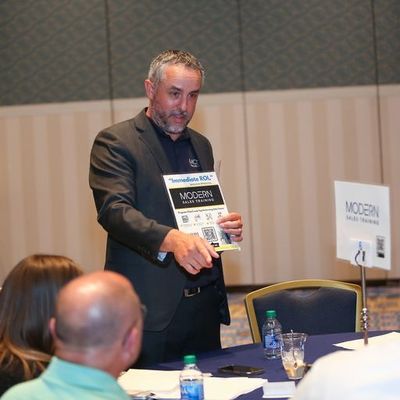
Derek Shebby
Founder, Modern Sales Training — 13× Xerox President’s Club Award Winner
Derek Shebby is a nationally recognized B2B sales authority with 20+ years in the field. He has trained 30,000+ salespeople and coaches 150+ reps live every week across Manufacturing, Managed IT Services, Office Technology, and B2B Services. About Derek →
Related Posts
- How to Create a Sales Process That Accelerates Growth
Sales Process - How to Prepare for a Great Prospecting Day in the Field
Cold Calling - Why Sales Training is Your Key to Exponential Growth
Sales Training - How I Prepare for a Great Sales Week
Preparation
Self-paced courses vs live programs
The self-paced Modern Sales Training courses, including Modern Sales Performer, The Fearless Prospector, and Virtual Selling Machine, are built around timeless sales fundamentals. They give reps the core frameworks, language, and habits they can keep using for years. For the most current strategies, live coaching, market updates, and the newest AI-focused prospecting and selling ideas, reps and managers should look at the live Tier 1, Tier 2, and Tier 3 programs: Sales Bootcamp, Sales Spartan, and Sales Leaders Bootcamp.